Security & Compliance

Security and governance that get AI past the audit

AI is only as trustworthy as the controls around it. We build cybersecurity, GRC and AI governance into the systems you run, so regulated data can go into production and stay there.

Security and compliance is our service for organizations that run regulated data and want AI on it. We audit and harden infrastructure, build secure development and DevSecOps practices, implement GRC programs and ISO 27001 controls, and govern AI systems with access control, logging and human review. It is for CTOs, CISOs and compliance leads.

certified information security management system
ISO 27001
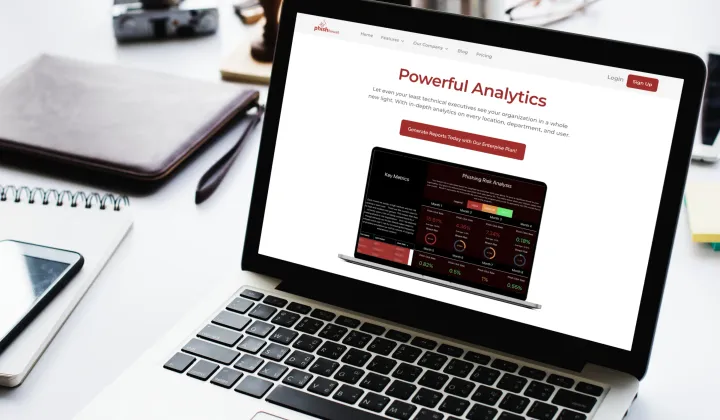
phish-click rate after six months on a training platform we built; competing products report over 5%
<1%
organizations on a single sign-on we integrated for a supply chain SaaS
500+
and RTO 4 h, verified in ransomware recovery drills
RPO 24 h
The problem

Why governance is the gate, not the afterthought

Data privacy, governance and compliance is the top enterprise AI concern in 2026, at 61%, ahead of accuracy at 55%. Procurement now writes data handling, model governance and audit-log access into contracts. A typical enterprise AI RFP puts 25% of the score on security and compliance and another 20% on LLM governance.

Only 1 in 5 organizations has a mature governance model for autonomous agents (Deloitte, 3,235 respondents). The gap is not policy. It is engineering: which identity the agent runs as, what it can touch, what gets logged, who reviews the output, and how you prove all of that to an auditor 18 months later.

Certifications are gates. SOC 2 Type II is the shortlist baseline, ISO 27001 carries weight in healthcare, finance and the public sector, and ISO/IEC 42001 now appears in roughly 40% of EU and 25% of North American enterprise AI RFPs by vendor estimates. Controls bolted on after a pilot rarely survive that scrutiny.
What we do

Capabilities

Security assessment and audit

Find the gaps before an attacker or an auditor does, and rank them by exposure.

  • Vulnerability assessment of infrastructure, network and applications
  • Threat models and attacker profiles per system
  • Penetration testing and secure code review
  • Gap analysis against ISO 27001, SOC 2, HIPAA and GDPR
  • Prioritized remediation plan with owners and dates

Secure SDLC and DevSecOps

Security in every stage of delivery, measured with OWASP SAMM rather than asserted.

  • Security requirements and abuse cases written at design time
  • Automated static analysis, dependency and container scanning in CI with SonarQube and Snyk
  • Release gates for code review and security test results
  • Code signing and change management per release
  • SAMM maturity assessment scored 0 to 3 per practice, with a roadmap

Identity and access

One identity backbone for employees, partners, suppliers and the AI agents that act on their behalf.

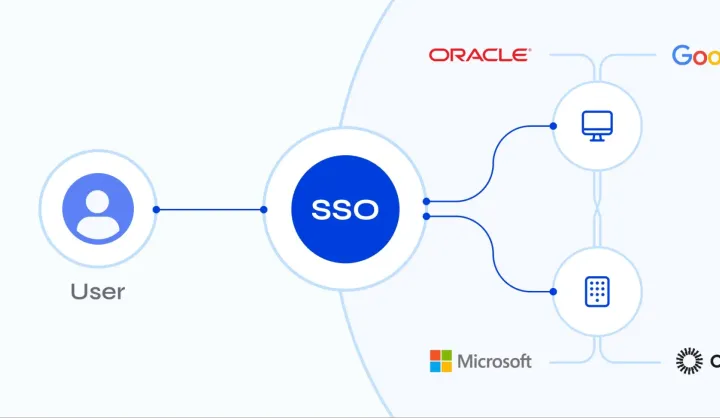
  • Single sign-on with Keycloak, OpenID Connect, OAuth 2.0 and SAML 2.0
  • Federation with Microsoft, Okta, Google, ADFS and other identity providers
  • Role-based access and separate realms for partner and supplier networks
  • Scoped service identities and credentials for AI agents
  • Audit trail for every access decision

Cloud and network security

Zero-trust design for cloud and on-premises environments, with recovery that survives a compromised admin.

  • Zero-trust architecture, next-generation firewalls and intrusion detection
  • Encryption at rest and in transit, key management with AWS KMS
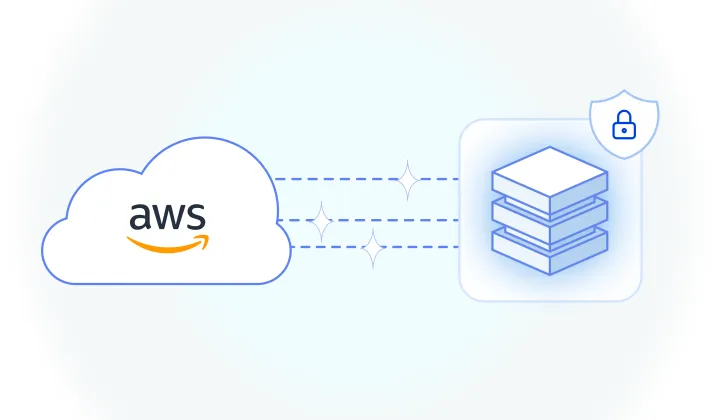
  • Immutable, cross-account backups with AWS Backup and S3 Object Lock
  • Logging, monitoring and automated incident response
  • Rehearsed disaster recovery with documented RPO and RTO

GRC programs and platforms

Governance, risk and compliance as workflows and data, not a folder of policies.

  • Assessment of current GRC tools, gaps and integration points
  • Risk register, controls matrix and policy management
  • Compliance workflows: internal audit support, incident management, evidence collection
  • Third-party and cyber risk management
  • Automation of manual compliance tasks with reporting and predictive analytics

ISO 27001 and certification readiness

We hold the certificate ourselves and have built the controls that back it.

  • Scope, statement of applicability and risk treatment plan
  • Control implementation across people, process and technology
  • Evidence collection and audit preparation
  • Readiness for SOC 2 Type II and ISO/IEC 42001
  • Ongoing management after certification

AI governance and security

Controls that make an AI system explainable to a regulator and safe to leave running.

  • Inventory of models, prompts and data flows, each with an owner
  • Guardrails, input and output filtering, prompt-injection defenses
  • Human-in-the-loop review for consequential decisions
  • Output logging, traceability and audit-ready evidence
  • Alignment with NIST AI RMF, ISO/IEC 42001 and EU AI Act obligations (high-risk deadlines from December 2027)
In production

How it runs in production

Controls that exist only in a policy document fail the first real audit. These stay in the system.

01

Access and identity

Every user, service and AI agent has an identity, a role and a scope. Privileges are least-privilege by default and reviewed on a schedule, with joiners and leavers handled automatically.

02

Logging and evidence

Access events, configuration changes, model inputs and outputs are logged to immutable storage. Evidence for auditors is exported from the system, not assembled by hand the week before.

03

Human review

Consequential AI actions route to a named reviewer with the context to decide. Override rates and review latency are tracked as operating metrics and feed model evaluation.

04

Incident response

Detection, escalation and recovery runbooks are tested in drills. Backups are immutable and off-account, so a ransomware event is a restore, not a negotiation.

Proof

What we have built

All case studies

How it works

How we work with you

  1. 01

    Assess

    Security diagnostics of infrastructure, network, applications and data protection. The regulatory requirements for your industry are mapped to the systems that must satisfy them.

  2. 02

    Plan

    A roadmap that ranks risks by exposure, selects controls and frameworks, and sets the order of work. Threat models are written before code changes. You receive it within days of the discovery call.

  3. 03

    Implement

    Controls are deployed across network, cloud, endpoints and the software delivery pipeline with minimal operational disruption. Governance for AI systems is built alongside the AI itself, not after it.

  4. 04

    Validate and run

    Penetration tests and attack simulations verify the controls. Monitoring, incident response, security updates and evidence collection then continue as an operating service.

Stack

Technologies we build with

Identity and access

  • Keycloak
  • Auth0
  • Okta
  • ADFS
  • OpenID Connect
  • OAuth 2.0
  • SAML 2.0

Cloud security on AWS

  • AWS IAM
  • AWS KMS
  • AWS Backup (compliance mode)
  • S3 Object Lock
  • AWS Elastic Disaster Recovery
  • CloudWatch

Secure delivery

  • SonarQube
  • Snyk
  • Terraform
  • Docker
  • Kubernetes
  • GitHub Actions
  • GitLab CI
  • Jenkins

Frameworks and standards

  • ISO 27001
  • SOC 2
  • ISO/IEC 42001
  • NIST AI RMF
  • OWASP SAMM
  • GDPR
  • HIPAA
  • PCI DSS
  • EU AI Act
FAQ

Security & Compliance: questions we get asked

What cybersecurity services do you provide?

Security assessments and penetration testing, strategy and roadmap, secure software development lifecycle and DevSecOps, identity and access management, cloud and network security, disaster recovery, GRC program design and AI governance. We are a software engineering company first, so the recommendations come from building and running regulated systems since 2012, not from a checklist. Erbis is ISO 27001 certified.

What is included in your security assessment process?

An inventory of systems and data flows, vulnerability scanning of infrastructure and applications, penetration testing, secure code review, threat modeling, and a gap analysis against the frameworks that apply to you, such as ISO 27001, SOC 2, HIPAA or GDPR. You receive a ranked list of findings with exposure, effort and an owner for each, and a roadmap that fixes the highest-risk items first.

How do you help maintain compliance requirements?

By turning requirements into controls that live in the system: access rules, logging, encryption, backup policies, change management and evidence collection that runs continuously. A GRC platform or workflow tracks controls, risks, policies and audit findings. Then we operate it with you: periodic access reviews, control testing, incident handling and audit preparation, so the next audit is an export rather than a project.

Can you secure both on-premises and cloud environments?

Yes. Most of our clients run a mix: legacy systems in a data center, applications on AWS or Azure, and SaaS tools around them. We design identity, network segmentation, encryption and monitoring across all of it, with zero-trust principles so that location is not the security boundary. Backups and disaster recovery are set up so that a compromise in one environment does not take the others with it.

What is GRC?

Governance, risk and compliance: the set of processes and tools an organization uses to set policy, identify and treat risks, and prove it meets the regulations and standards that apply to it. In practice it means a risk register, a controls framework, policy management, incident and audit workflows, and reporting. Done as software, GRC removes manual work and gives leadership a live view of exposure instead of an annual one.

How do you govern AI systems in regulated environments?

Every model, prompt and data flow is inventoried and owned. Agents run under scoped identities with least-privilege access to systems. Inputs are filtered, outputs are logged and traceable, and consequential decisions route to a human reviewer with the context to overrule. Controls are mapped to NIST AI RMF, ISO/IEC 42001 and, where relevant, EU AI Act obligations, so the evidence an auditor asks for already exists.

Get AI through your next audit

A 45-minute discovery call with an engineer who has done this. Bring your regulatory scope and the AI use case; we will tell you which controls are missing and what they cost.

AWS partner · Databricks partner · ISO 27001 · You own the code from day one