Hoste's platform rebuilt from no-code to a zero-downtime rental SaaS in under a year
Hoste's short-term rental management product rewritten from Salesforce no-code into a Node.js, React and Google Cloud SaaS with a self-service portal.
- from Salesforce no-code to a full property-management SaaS
- Under a year
- downtime reported since the new client portal launched
- Zero
- service lines onboarded through one portal: marketing, accounting, housekeeping, guest relations
- 4
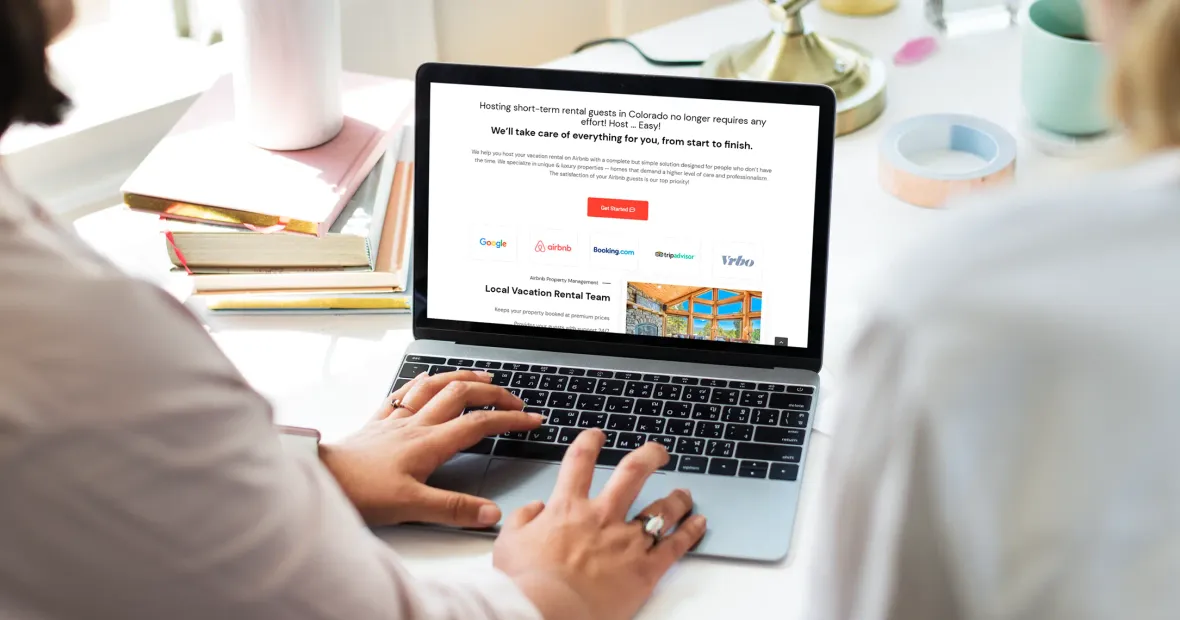
Context
Property management software enables efficient operations with real-estate assets, whether residential properties, commercial spaces or event venues. Erbis developed short-term rental management software for a US-based client. Below are the details of the development process and the business outcome.
Challenge
Our client, a property management startup from Colorado Springs, set out to give hosts and renters a better experience. After listing their own home on Airbnb, the founders saw how much work property owners face in publishing and maintaining a listing: high-resolution photos, communication with renters, cleaning, and timely access to the property. They believed the process should be simpler.
So they created Hoste, a property management service that manages properties for hosts so owners can earn passive income without investing much time.
The first version of the software was built on the no-code Salesforce platform. Performance and functionality problems led the client to rewrite it completely on modern technology, and they turned to Erbis to build a property management SaaS with an excellent user experience.
Pre-development
We began by reviewing the project documentation, running functionality tests and documenting the client’s specific requirements. We also examined the existing IT infrastructure and technologies to shape our implementation approach.
We gave the client a detailed roadmap, a feature breakdown and technical justifications for each function, so the project’s progress was clearly defined. Regular discussions with the client aligned our vision and incorporated their input while adhering to industry best practice.
Solution
Erbis worked on the project for one year, and the collaboration is ongoing. The team consisted of three full-stack developers and a tech lead.
We implemented the fundamental building blocks and the key modules that handle the core logic and operations of the software, and set up the data structures and features that let it perform its primary functions.
We followed Scrum with two-week iterations and held regular meetings with the client to report completed tasks, upcoming plans, challenges encountered and proposed solutions.
End product
In less than a year we delivered a full property management SaaS that lets customers earn income by providing high-quality hospitality to guests.
The client portal lets customers onboard easily and access the essential property management services. During registration the system asks a few simple questions and, based on the answers, offers tailored service options and flexible pricing.
Services available through the portal:
- Digital marketing. Professional photos and videos, posted on reputable rental platforms.
- Accounting and taxation. Hoste applies for a sales tax licence on the owner’s behalf, provides detailed monthly accounting statements and handles other tax activities associated with short-term rental.
- Housekeeping. High-quality cleaning and laundry so the property is always ready to rent.
- Guest relations. Hoste handles all guest communication, from booking through check-in, check-out and post-stay follow-up.
Architecture and tech stack
A Node.js back end over PostgreSQL serves a React client portal, packaged in Docker containers and deployed on Google Cloud, replacing the original Salesforce no-code implementation.
- Node.js
- React
- PostgreSQL
- Docker
- Google Cloud
Results
Since the new client portal launched, the client has reported:
- An expanded customer base
- Improved user experience
- Better system performance
- Zero downtime
- A boost in income
These outcomes validate the portal’s implementation and its positive impact on the client’s business.
What made it work
Erbis’s takeaways from this engagement:
- Test the old system before designing the new one. Functionality testing of the Salesforce version defined the requirements more precisely than the documentation did.
- Justify every feature in writing. A roadmap with technical rationale per function kept a startup’s scope disciplined through a year of work.
- Onboard with questions, not forms. A short guided registration that tailors services and pricing is what made the portal easy to adopt.
- Keep the team small and senior. Three full-stack developers and a tech lead shipped a complete SaaS in under a year.